Replacing windows involves more than choosing a frame colour or operating style. One of the first questions is whether two panes of glass are enough or whether a third pane is worth the additional cost.
For Fraser Valley homeowners, the answer depends on the house, the room and what you want the new windows to improve. Our winters are cool and damp, summer heat can build through exposed glass, and some neighbourhoods contend with traffic or rail noise. When comparing double-pane or triple-pane windows, it helps to look beyond the pane count and consider the complete window’s insulation, condensation resistance, sound control, price and installation.
The goal is not to buy the most glass available. It is to choose a window package that solves the problems you actually have. A comfortable bedroom, a quieter home office and a bright south-facing living room may each call for a different conversation about double-pane or triple-pane windows.
The Basics: What Changes When You Add a Pane?
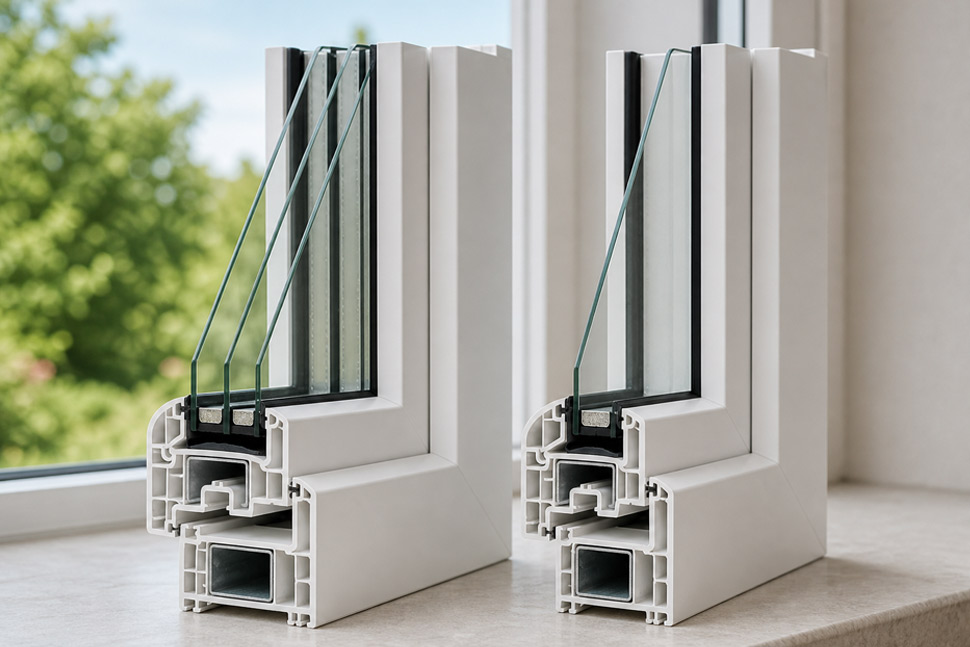
When homeowners compare double-pane or triple-pane windows, the most obvious difference is the number of sheets of glass. A double-pane unit has two panes separated by one sealed space. A triple-pane unit has three panes and two sealed spaces. Those spaces are commonly filled with an insulating gas, and Low-E coatings can be applied to the glass to reduce heat transfer.
The extra pane can improve performance, but glass count is only part of the story. Frame construction, warm-edge spacers, weatherstripping, hardware, air leakage and installation all affect how the finished window performs. A well-built, properly installed double-pane window may be a better choice than a lower-quality triple-pane product installed poorly. Compare the rating for the complete window, not just a centre-of-glass number or a sales claim.
Insulation and Energy Efficiency
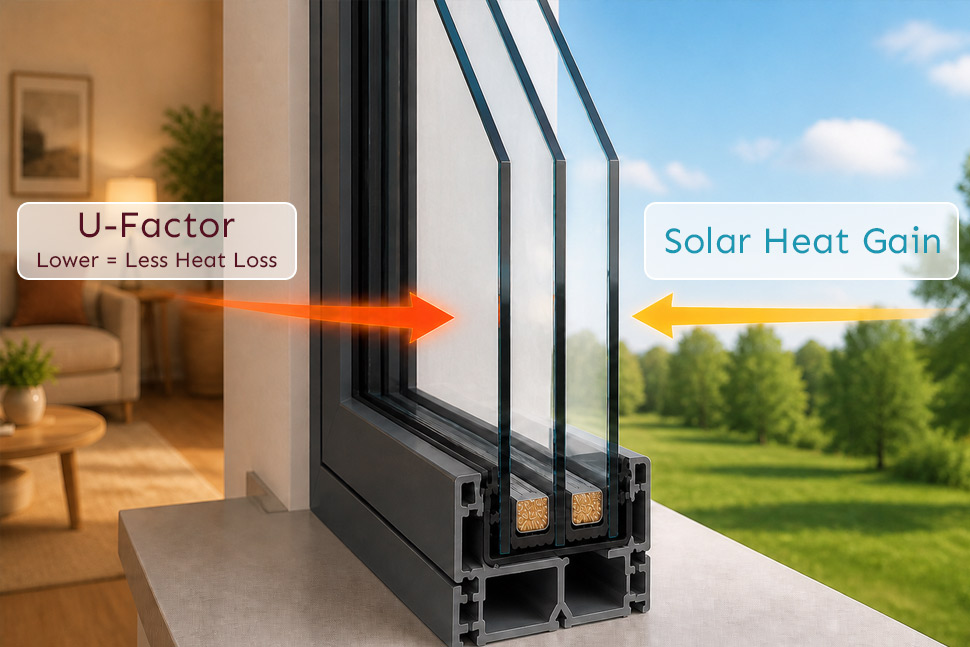
For most people weighing double-pane or triple-pane windows, insulation is the deciding factor. Triple-pane glass generally slows heat transfer more effectively, helping the interior glass stay warmer on cold days. That can make rooms feel more comfortable near large windows and reduce cold downdrafts. In summer, the right glass package can also help limit unwanted heat gain, although Low-E coating and solar heat gain coefficient matter as much as the number of panes.
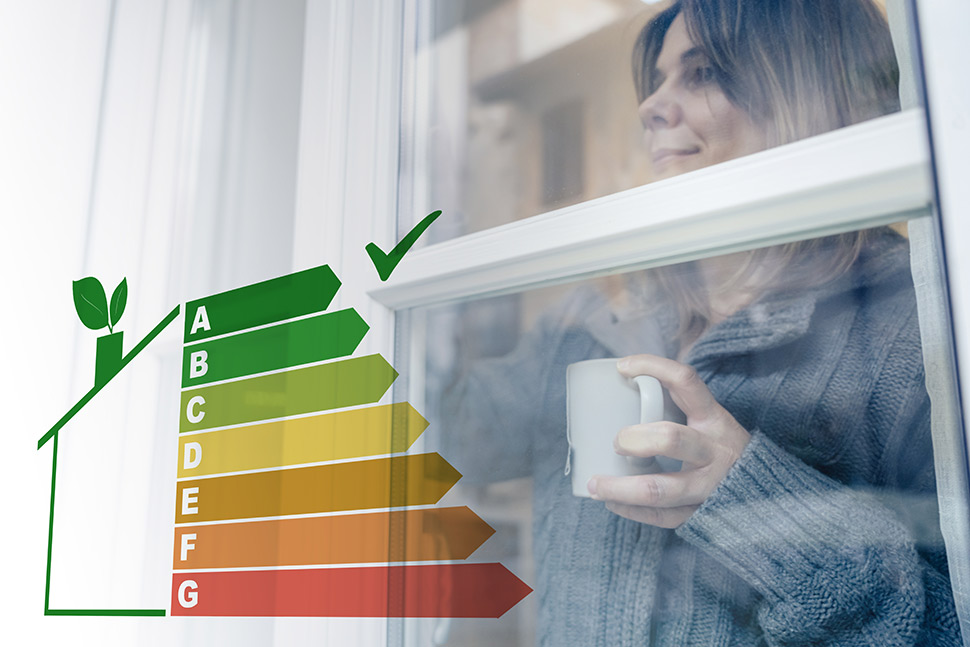
Natural Resources Canada notes that strong double-glazed windows can reach U-factors of 1.2 W/m²·K or lower, while triple-glazed products can reach about 0.8 W/m²·K. A lower U-factor means less heat moves through the window. The Energy Rating, or ER, also considers solar heat gain and air leakage; a higher ER is better. These labels make it easier to compare energy-efficient windows in Chilliwack without relying on pane count alone.
In the Fraser Valley’s cool, wet winters, either option can be a major improvement over old, drafty or failed windows. Quality double-pane products often provide solid efficiency at a lower cost. Triple-pane becomes more compelling when a homeowner wants maximum window insulation, has large areas of glass, struggles with cold rooms, or plans to stay in the home long enough to value the added comfort.
Noise Reduction and Condensation
The choice between double-pane or triple-pane windows can also affect how a home sounds. A third pane may reduce some exterior noise, which can be helpful near Highway 1, rail lines, schools or busy streets. However, more panes do not automatically create soundproof windows. Glass thickness, different thicknesses between panes, spacing, laminated glass, frame seals and installation details can matter just as much. If noise is a priority, ask for performance information for the specific window configuration rather than assuming every triple-pane unit will be quieter.
Triple-pane glazing can also improve condensation resistance because the room-side surface of the glass typically stays warmer in winter. That reduces the chance that indoor moisture will condense on the glass. It does not eliminate condensation in every situation. High indoor humidity, limited ventilation, closed blinds and very cold outdoor temperatures can still create moisture. Condensation between the panes is different: it usually points to a failed seal in the insulated glass unit and requires service or replacement.
Cost and Long-Term Value
Price is where the double-pane or triple-pane windows decision becomes personal. Triple-pane units use more glass, are heavier and generally cost more. The added investment may be worthwhile for a high-performance renovation, a particularly exposed home or rooms where comfort and noise control are priorities. For another household, spending the same budget on a better frame, more complete replacement or stronger installation details may create greater overall value.
Avoid comparing quotes on glass count and total price alone. Look at the window’s U-factor, ER, air-leakage rating, Low-E package, frame, hardware, warranty and installation method. The best quote explains what is included and why it suits the opening. For replacement windows in Chilliwack, the condition of the existing frame and wall opening can also affect the scope and final result.
Energy savings matter, but they should not be treated as a guaranteed payback calculation without looking at the home. Window area, orientation, heating system, current window condition, household habits and energy prices all influence the outcome. Comfort, reduced drafts and fewer cold spots may be the benefits homeowners notice first.
Which Windows Suit Fraser Valley Homes?
There is no single winner in the double-pane or triple-pane windows comparison. For many Fraser Valley homes, a high-quality double-pane window offers a sensible balance of energy performance, comfort and price. It can be an excellent choice when the existing windows are old, leaky or have failed seals and the goal is a dependable whole-home upgrade within a set budget.
Triple-pane windows in BC make the most sense when the homeowner values the highest available thermal performance, wants warmer interior glass, has noise-sensitive rooms, or is upgrading a very efficient home. They can also be useful on the coldest or noisiest sides of a property. The best windows for the Fraser Valley climate may therefore be a room-by-room solution rather than one glazing package used everywhere.
A mixed approach can work well. A homeowner might choose triple-pane glazing for a north-facing bedroom or a living room beside a busy road, then use quality double-pane products elsewhere. Product availability, matching sightlines and whole-home ratings need to be confirmed, but the idea is worth discussing when priorities vary across the house.

Choose the Right Windows for Your Fraser Valley Home
Before choosing double-pane or triple-pane windows, ask to see the performance label for each proposed unit. Compare the whole-window U-factor and ER, confirm the Low-E and gas-fill package, and ask how the product will be installed. If condensation is a concern, discuss indoor humidity and ventilation as well as glass performance. If noise is the concern, describe its source and when it is most disruptive.
The right answer depends on your home, budget and priorities. Double-pane can deliver very good performance and better value for many projects; triple-pane can add comfort, insulation and noise control where those benefits matter most. Neither option can compensate for a weak frame or careless installation.
It is also worth thinking beyond today’s utility bill. New windows become part of the building envelope for years, so day-to-day comfort, maintenance, warranty support and installation quality deserve real weight. When double-pane or triple-pane windows are compared as complete systems, the better value is usually the one that fits the home rather than the one with the longest feature list.
Unger Window & Door can assess your existing windows, explain the ratings and help you compare products without guessing. Visit the showroom to see and operate the options in person, or contact the team to arrange an assessment for your Fraser Valley home. Seeing the differences up close makes a technical decision much easier to understand.