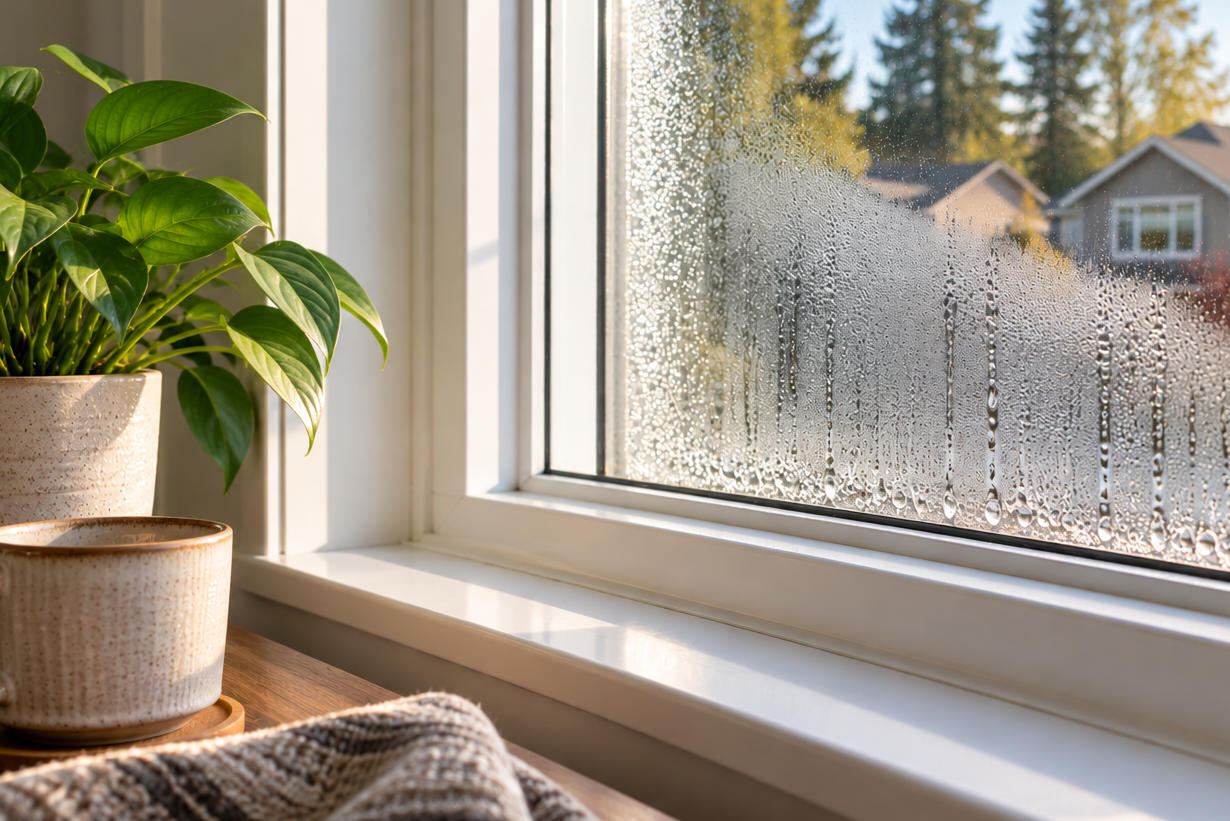
Have you ever noticed water droplets collecting on your windows on a cold morning? Or perhaps you’ve recently installed new windows and are surprised to see moisture forming on the glass.
It’s natural to wonder whether something is wrong, especially if you’ve invested in energy-efficient windows.
The good news is that condensation on windows doesn’t always indicate a problem. In fact, depending on where the moisture appears, it can be a sign that your windows are doing exactly what they’re supposed to do.
Understanding why condensation forms, and knowing when to be concerned, can help you avoid unnecessary repairs and recognize problems that genuinely need attention.
Why Does Condensation Form on Windows?
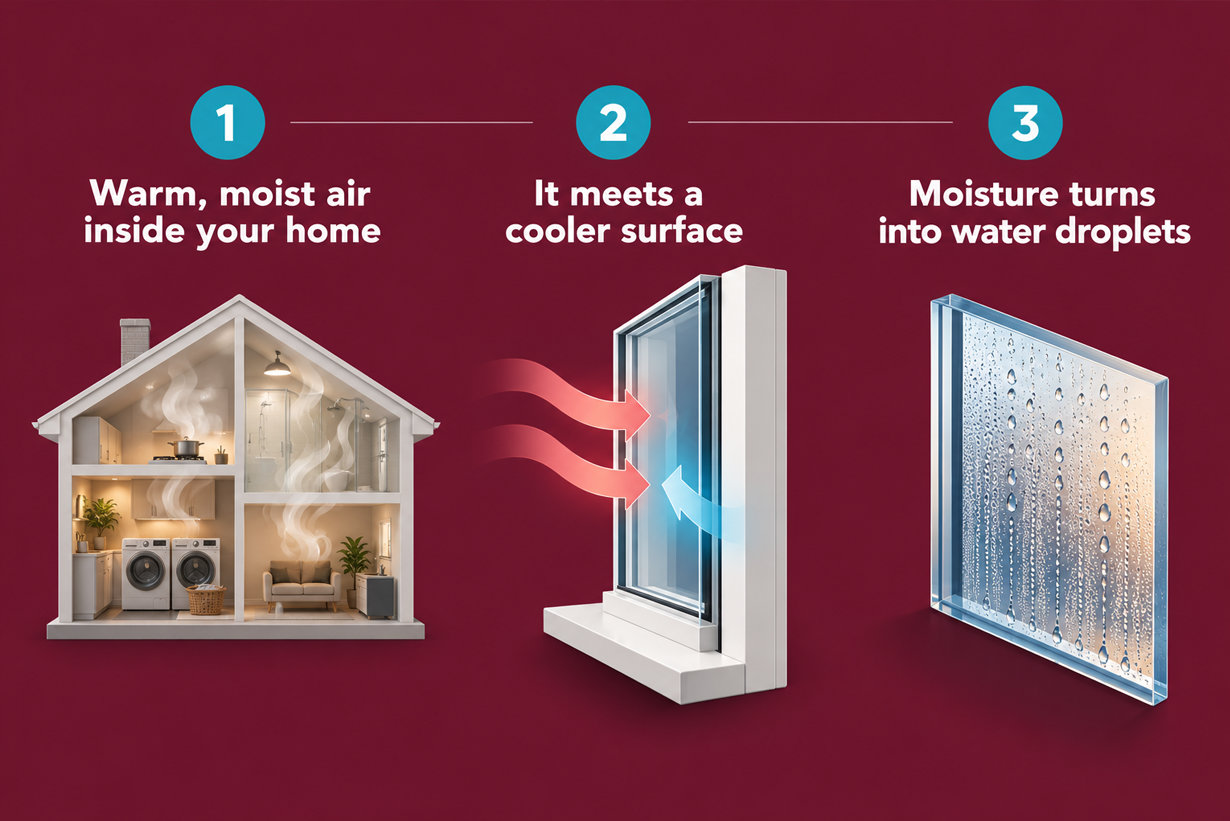
Condensation happens when warm, moist air comes into contact with a surface that’s cooler than the surrounding air.
Think about a cold drink on a warm summer day. Water droplets form on the outside of the glass because moisture in the air cools when it touches the surface.
The same thing happens with your windows.
Air naturally contains moisture, and the amount it can hold depends on its temperature. When moist air cools enough, some of that moisture turns into water droplets.
In your home, everyday activities like cooking, showering, doing laundry, and even breathing add moisture to the air.
When that air meets cooler window glass, condensation can develop.
However, not all condensation on windows means the same thing. Where the moisture appears tells you a great deal about what’s happening.
Condensation on the Inside of Windows
Condensation on the inside of windows is especially common during colder months.
When outdoor temperatures drop, the interior surface of your windows can become cooler than the air inside your home. If your indoor humidity is high enough, moisture will collect on the glass.
This is particularly noticeable during winter in British Columbia, when homeowners keep their windows closed and heating systems running.
A little condensation during especially cold weather isn’t necessarily concerning. However, frequent or heavy moisture buildup deserves attention.
Water that regularly collects along window frames and sills can eventually damage paint, wood, drywall, and surrounding materials. Persistent moisture can also encourage mould growth.
How Can You Reduce Interior Window Condensation?
The first step is managing indoor humidity.
Running bathroom exhaust fans during showers, using kitchen ventilation while cooking, and ensuring your dryer vents outdoors can help reduce excess moisture.
Keeping furniture and heavy curtains from blocking airflow around windows can also help the glass stay warmer.
If condensation continues, consider checking your home’s humidity levels with a hygrometer.
The ideal humidity level changes with outdoor temperatures. During particularly cold weather, you may need to reduce indoor humidity to prevent moisture from collecting on cooler surfaces.
Remember, condensation on windows is often related to the conditions inside your home rather than a defect in the window itself.
Condensation on the Outside of Windows
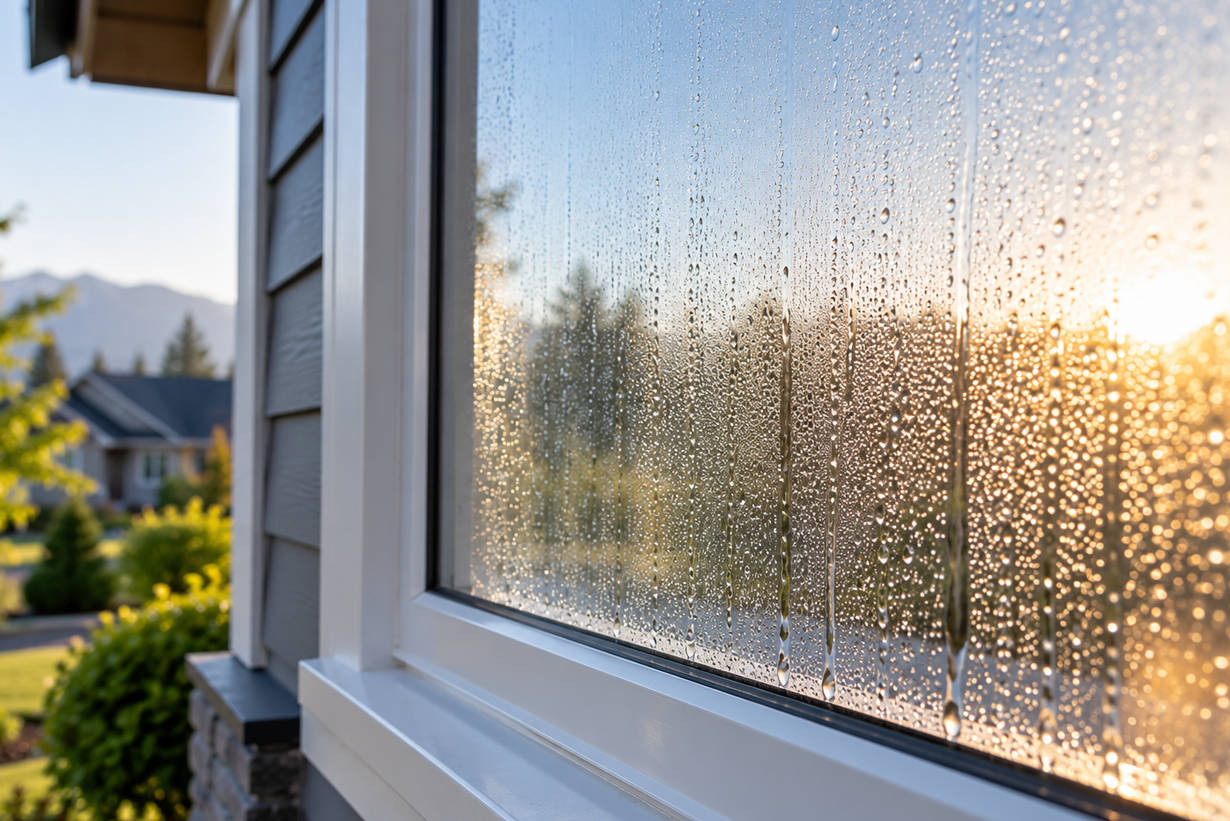
Finding condensation on the outside of windows can be surprising, particularly when they’re relatively new.
However, exterior condensation is often a positive sign.
Modern energy-efficient windows are designed to reduce heat transfer between your home and the outdoors.
Because less indoor heat escapes through the glass, the exterior surface can remain relatively cool.
On certain mornings, especially when outdoor humidity is high, that cool surface may fall below the dew point. Moisture then forms on the outside of the glass.
This is similar to dew collecting on your lawn overnight.
Exterior condensation is particularly common during cool, humid mornings in the Fraser Valley. It usually disappears as the outdoor temperature rises or sunlight warms the glass.
If you’re noticing condensation on new windows, this may simply indicate that they’re providing effective insulation.
There’s generally nothing to repair when moisture forms on the exterior surface and clears naturally.
Moisture Between Window Panes Is Different
While condensation on the inside or outside of windows can be normal, moisture trapped between the glass panes is another matter.
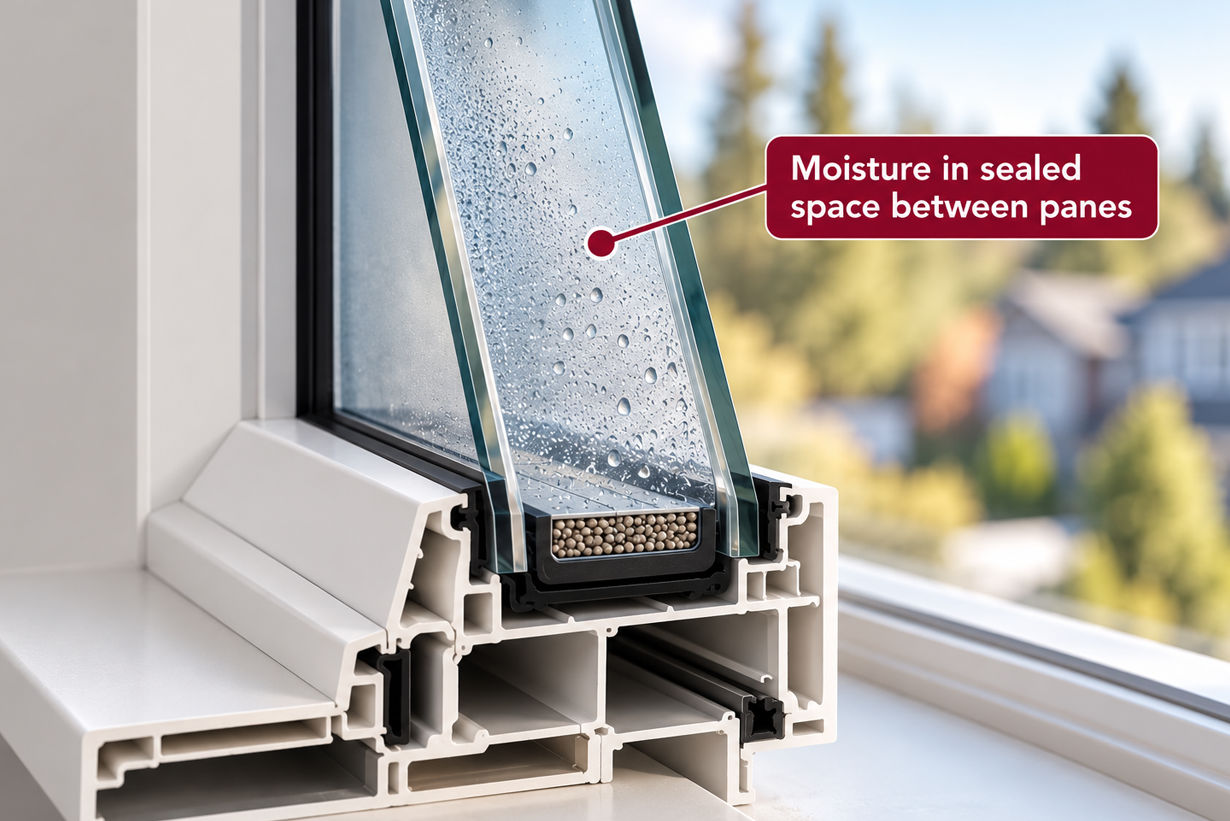
Double-pane and triple-pane windows contain sealed spaces between the layers of glass. These spaces help reduce heat transfer and improve insulation.
When the seal around an insulated glass unit fails, moisture can enter the space between the panes.
Over time, you might notice persistent fogging, cloudy patches, or water droplets that cannot be wiped away from either side.
Unlike ordinary surface condensation, this moisture is trapped inside the glass unit.
A failed seal can reduce the window’s insulating performance and affect visibility.
However, it doesn’t automatically mean the entire window needs replacing.
Depending on the condition of the frame, the window’s construction, and the available replacement components, it may be possible to replace the insulated glass unit without replacing the complete window.
A professional assessment can help determine which option makes the most sense.

Why Do New Energy-Efficient Windows Still Have Condensation?
One of the most common misunderstandings about replacement windows is that better insulation should eliminate condensation completely.
That’s not how window performance works.
Energy-efficient windows help control heat transfer, but they cannot remove moisture from the air.
In fact, new windows can sometimes make condensation more noticeable.
Older windows may allow more air to leak in and out of the home. When those windows are replaced with tighter, better-sealed units, less uncontrolled air exchange occurs.
This is beneficial for comfort and energy efficiency, but it can also mean indoor moisture remains in the home longer if ventilation is inadequate.
As a result, condensation on windows may become more noticeable even though the new windows are performing properly.
Exterior condensation can also become more common because the outer glass stays cooler.
Neither situation automatically indicates poor installation or defective products.
The important question is whether the moisture is forming because of normal temperature and humidity conditions or because something isn’t functioning correctly.
When Should You Be Concerned About Window Condensation?
Occasional condensation on windows is usually manageable. However, certain conditions deserve a closer look.
If moisture repeatedly pools on your windowsills, damages surrounding finishes, or appears alongside mould, it’s important to investigate.
Persistent fogging between sealed glass panes also suggests that the insulated glass unit may have failed.
If condensation is accompanied by noticeable drafts, water leaks, or deteriorating frames, there may be additional issues affecting your windows.
Natural Resources Canada provides a helpful guide to window condensation that explains common causes and ways to reduce moisture buildup.

Understanding Your Windows Helps You Make Better Decisions
Seeing condensation on windows doesn’t automatically mean you need repairs or replacements.
Moisture on the exterior may indicate effective insulation. Interior condensation often points to humidity and ventilation conditions. Moisture trapped between sealed panes, however, usually requires professional attention.
At Unger Window & Door, we believe homeowners deserve clear explanations before making decisions about their windows.
If you’re dealing with persistent condensation, foggy glass, or concerns about window performance, our team can help identify the cause and explain your options.
Whether the solution involves managing humidity, replacing a sealed glass unit, or considering new windows, we’ll help you understand what’s necessary and what isn’t.